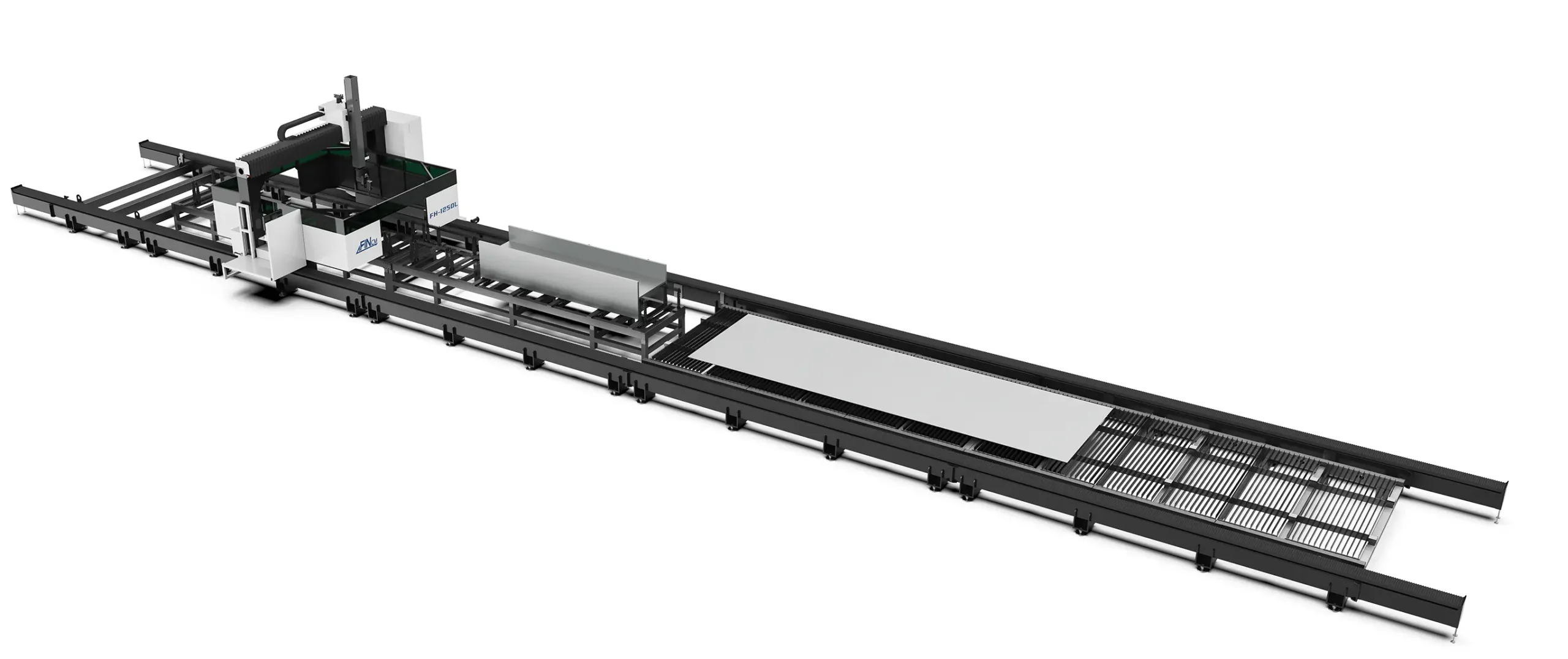

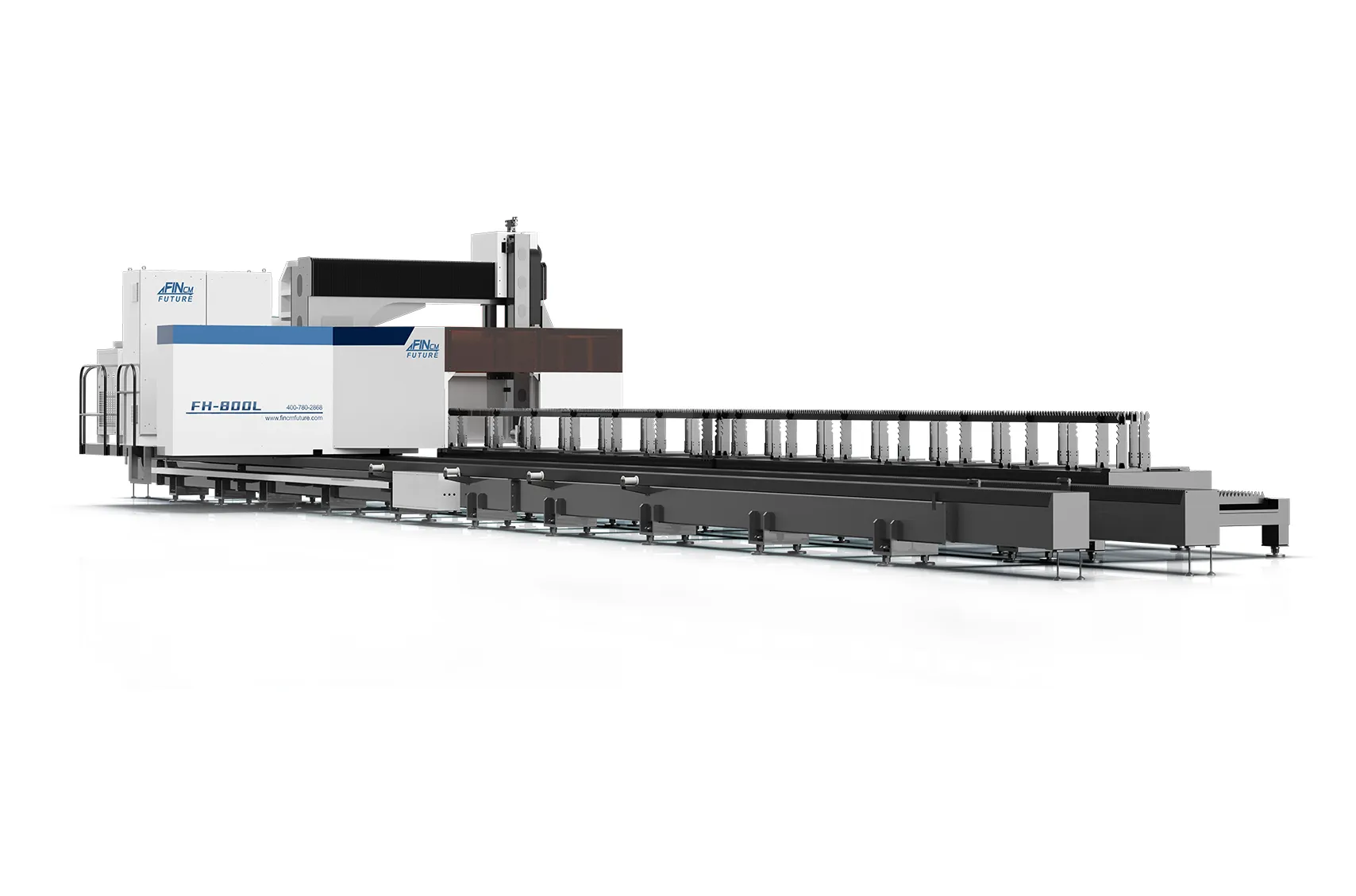

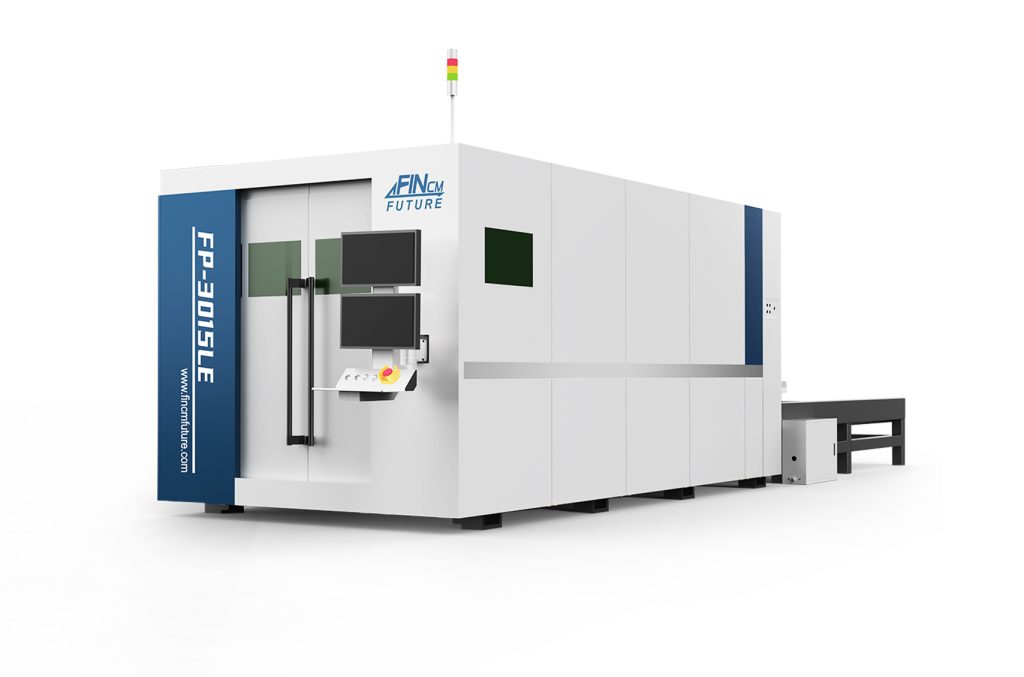


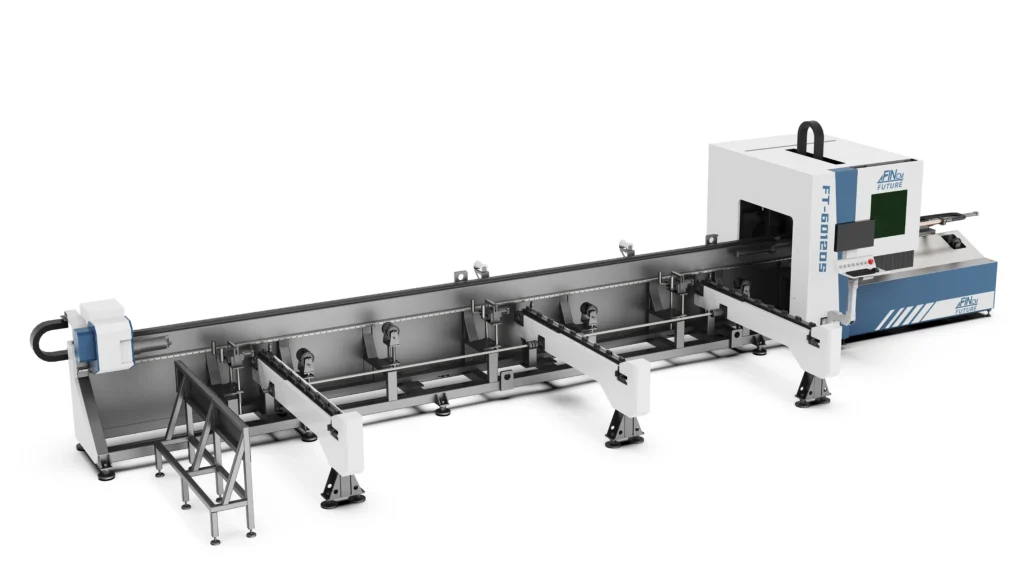




A fiber laser tube machine can process both tubes and structural profiles because laser cutting technology is material-based rather than shape-dependent.
With high-power fiber lasers, multi-axis CNC motion control, and heavy-duty clamping systems, modern machines are capable of cutting:
-
Round tubes
-
Square and rectangular tubes
-
H beams
-
I beams
-
Angle steel
-
Channel steel
-
Custom-shaped structural profiles
1. Intelligent and Flexible Production

Modern systems are equipped with:
-
Intelligent control software
-
Process parameter databases
-
Automated nesting systems
Operators can store hundreds of profile parameters and switch between tube and structural profile production simply by selecting programs.
This enables:
-
Small-batch customization
-
Multi-product manufacturing
-
Flexible production planning
Such flexibility is especially valuable for manufacturers serving diverse industrial sectors.
So, a fiber laser tube cutting machine can cut both tubes and structural profiles because:
-
Laser cutting technology is not limited by shape
-
Multi-axis CNC systems allow complex contour tracking
-
High-power fiber lasers enable thick structural steel processing
-
Heavy-duty clamping systems support asymmetrical profiles
-
Intelligent software allows seamless switching between tube and profile production
Modern fiber laser tube cutting machines have evolved into integrated structural processing solutions suitable for heavy manufacturing, high-precision welding, and high-efficiency mass production.
2. Multi-Axis CNC Systems Enable Structural Profile Cutting
Modern fiber laser tube cutting machines use advanced CNC systems controlling:
-
X, Y, Z linear axes
-
A and C rotary axes
This allows:
-
3D contour tracking
-
Flange and web cutting on H beams
-
Intersecting line cutting
-
End profile processing
-
Bevel cutting for welding preparation
Because the cutting head can dynamically adjust position and angle, the machine can process complex structural profiles just as accurately as standard tubes.
3. High Power Enables Thick-Wall and Heavy-Duty Cutting
Laser power determines the thickness that can be processed efficiently.
Typical ranges:
-
6kW: medium structural steel
-
12kW: heavy profiles
-
20kW and above: thick-wall structural beams above 20 mm
For example, a 20kW fiber laser tube cutting machine can stably cut carbon steel exceeding 20 mm and even 30 mm, making it suitable for:
-
Steel structure fabrication
-
Shipbuilding
-
Energy equipment manufacturing
-
Heavy machinery production
Higher power improves penetration stability, cutting speed, and edge consistency.
4. Heavy-Duty Clamping Supports Asymmetrical Profiles
H beams and angle steel are asymmetrical and heavier than hollow tubes.
To ensure precision, modern machines are equipped with:
-
High-load pneumatic chucks
-
Automatic support brackets
-
Reinforced bed structures
-
Anti-vibration tracking systems
These systems prevent deflection and movement during high-power cutting, maintaining accuracy within ±0.05 mm.
Stable support is the key reason why one machine can handle both tubes and heavy structural profiles.
5. One Setup for Cutting and Beveling
In structural fabrication, welding quality is critical.
A fiber laser tube cutting machine can complete:
-
Profile cutting
-
Bevel preparation
-
Welding groove formation
in a single clamping operation.
Compared with traditional two-step processing (cutting + secondary beveling), production efficiency can increase by more than 150%.
Bevel cutting increases welding contact area and can significantly improve weld strength, reducing defects such as incomplete penetration.
This makes the system especially suitable for engineering machinery, construction frameworks, and load-bearing structures.
6. High Precision and Surface Quality
Modern fiber laser tube cutters achieve:
-
Cutting accuracy within ±0.05 mm
-
Low surface roughness (Ra ≤ 12.5)
-
Burr-free edges
-
Minimal thermal deformation
Cut parts can directly enter welding processes without secondary grinding.
This level of precision is important not only in heavy industry but also in:
-
Fitness equipment manufacturing
-
High-end furniture
-
Precision metal fabrication
7. Laser Cutting Is Based on Material, Not Shape
Fiber laser cutting works by focusing a high-energy beam onto the metal surface, melting or vaporizing the material. Assist gases remove molten metal to form a clean kerf.
The process depends on:
-
Material type
-
Thickness
-
Potencia del láser
It does not depend on whether the workpiece is round, square, or an H beam.
As long as the cutting head can follow the programmed path, the machine can cut the shape.
This is fundamentally different from mechanical cutting, which requires different molds or tools for different profiles.
Frequently Asked Questions (FAQ)
Can a fiber laser tube cutting machine cut H beams?
Yes. With multi-axis CNC control and proper clamping, it can cut H beams, I beams, angle steel, and channel steel.
What laser power is required for structural steel?
For structural steel above 20 mm thickness, 20kW fiber laser systems provide stable and efficient cutting.
Is a tube laser suitable for heavy structural fabrication?
Yes. Modern fiber laser systems are designed for structural applications and high-efficiency manufacturing.
Can one machine process both tubes and profiles?
Yes. Fiber laser tube cutting machines support flexible processing of hollow tubes and structural profiles.