







Fiber laser cutting machines have become the preferred solution in modern metal fabrication due to their speed, precision, and reliability. However, one of the most common questions buyers ask is: Why can a fiber laser cutting machine only cut metal, but not materials like wood, plastic, acrylic, or stone?
To answer this, it is essential to understand both the working principles of fiber lasers and the absorption characteristics of different materials.
1. The Science Behind Fiber Lasers
Fiber laser cutting machines operate at a wavelength of 1.06 μm, generated by a rare-earth-doped fiber and delivered through a flexible optical fiber. This wavelength has three critical characteristics:
- Extremely high absorption in metals
Stainless steel, carbon steel, aluminum, brass, and other metals strongly absorb 1.06 μm laser energy. This allows the laser to quickly melt and vaporize metal with a narrow kerf and clean edge.
2. Low absorption in non-metals
Wood, plastics, acrylic, and stone do not efficiently absorb this wavelength. Instead of melting, they either reflect, diffuse, or burn irregularly.
3. High energy density and small spot size
Fiber lasers create a fine, focused beam ideal for precision metal cutting—something CO₂ lasers or mechanical tools cannot match.
This combination makes fiber lasers exceptionally efficient for metal but naturally unsuitable for non-metal materials.
2. Why Fiber Lasers Cannot Cut Wood, Plastic, or Stone
(1) Material Absorption Issues
Non-metal materials interact very differently with a 1.06 μm laser beam:
- Wood absorbs too little laser energy and burns unpredictably.
- Plastic and acrylic have poor absorption and tend to melt unevenly or release toxic fumes.
- Stone, ceramic, and glass are highly reflective or brittle under this wavelength, causing cracks rather than clean cuts.
Without proper absorption, the laser cannot perform controlled cutting.
(2) Risk of Fire or Safety Hazards
Fiber laser beams are extremely concentrated. When applied to wood or plastic, the material surface may ignite instantly, causing operational hazards.
(3) Reflection Damage
Many non-metal materials reflect near-infrared wavelengths. This reflected energy may travel back into the laser source and damage internal components, posing a high-cost risk.
3. Why CO₂ Lasers Can Cut Non-Metals Instead
CO₂ laser cutters operate at a different wavelength—10.6 μm—which is readily absorbed by:
- Wood
- Acrylic and plastics
- Leather
- Rubber
- Paper
- Stone (with proper settings)
This makes CO₂ lasers the preferred choice for non-metal processing. In contrast, fiber lasers excel only when cutting metal.
4. Does This Mean One Machine Can Cut All Materials?
Não.
In laser technology, one machine cannot perfectly cut both metal and non-metal materials. The reason lies in:
- Different absorption wavelengths
- Different thermal responses
- Different melting and vaporization characteristics
This is why professional manufacturers separate machines into fiber lasers (metal) and CO₂ lasers (non-metal) instead of making one universal machine.
5. When Should You Choose a Fiber Laser Cutting Machine?
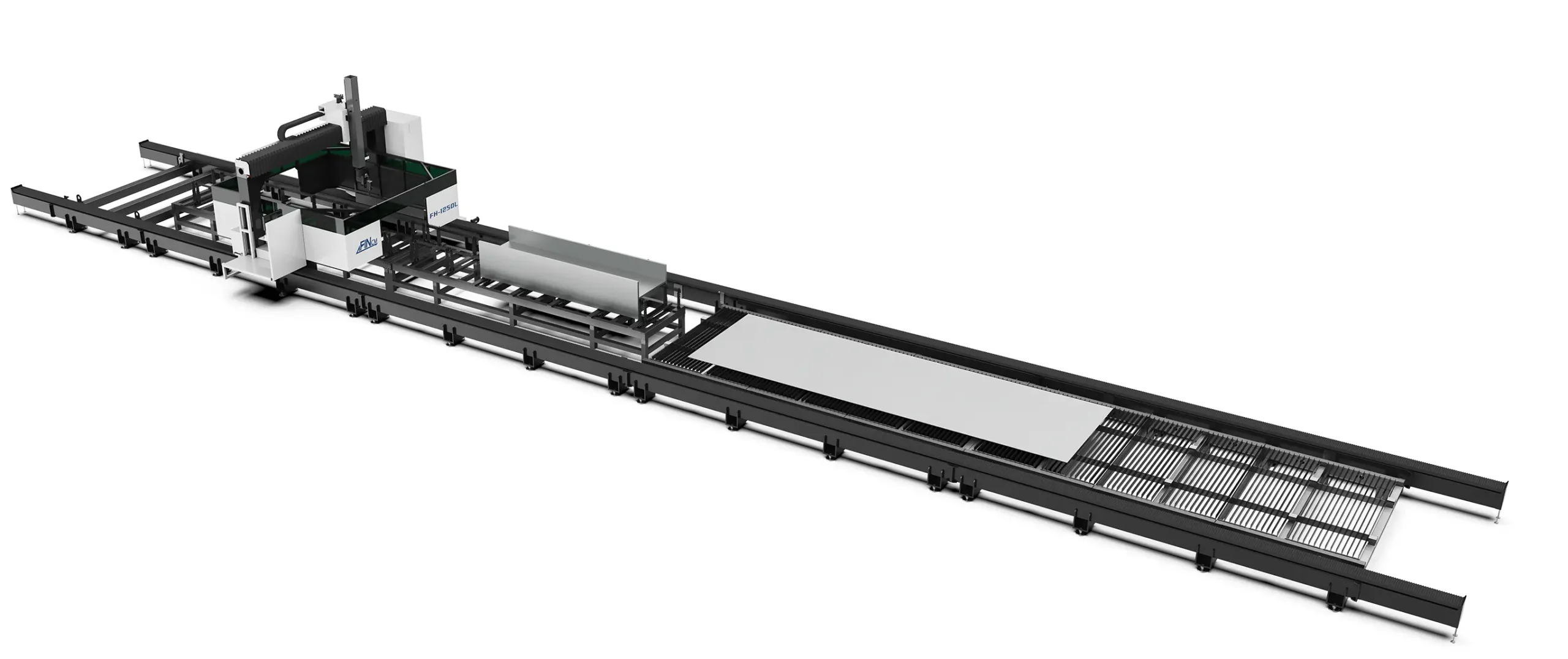
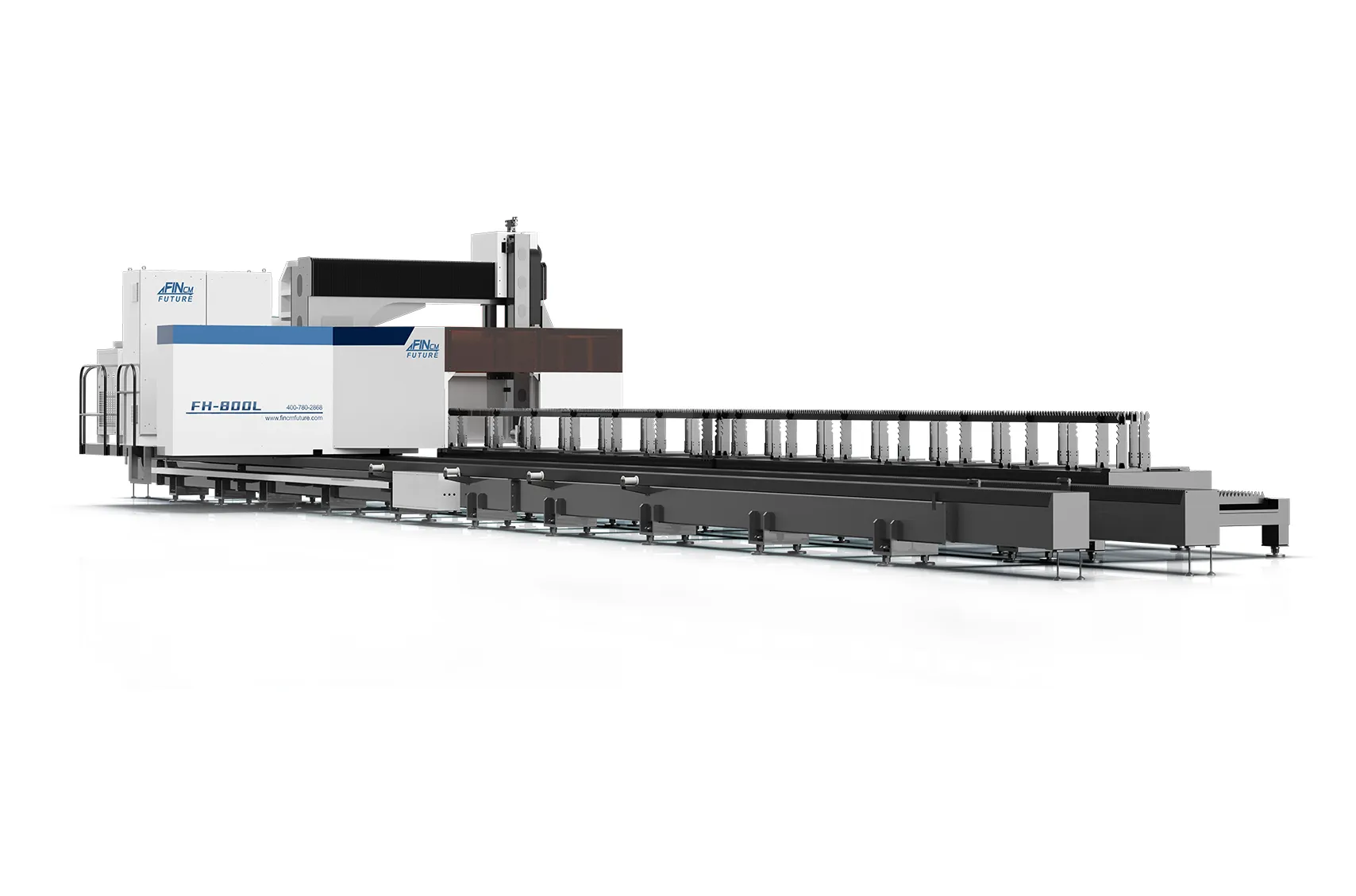
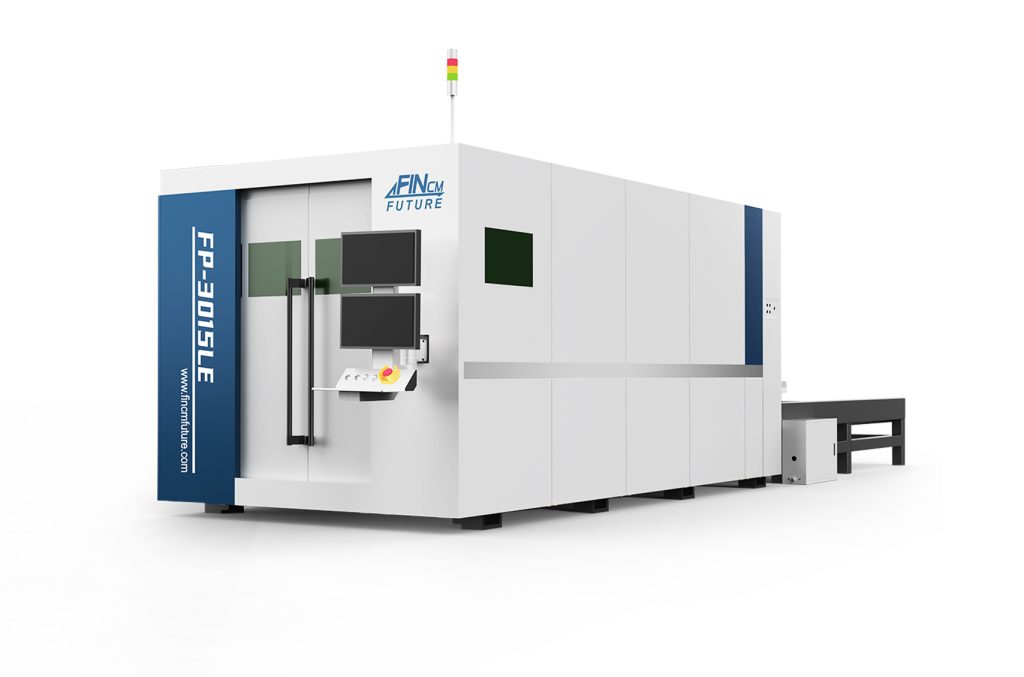
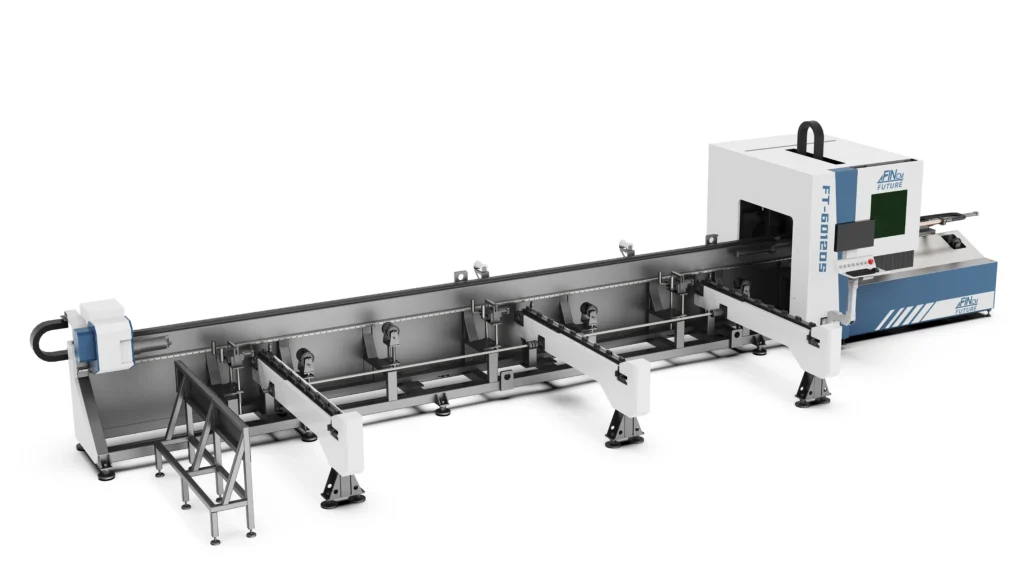
A fiber máquina de corte a laser is the best choice when your application involves:
- Aço inoxidável
- Carbon steel
- Aluminum and alloys
- Brass, copper
- Galvanized steel
- Metal tubes and pipes
- Thick or thin metal plates
High-speed production or mass manufacturing
Fiber lasers offer:
- Faster cutting speeds
- Lower operating cost
- Minimum maintenance
- High electro-optical efficiency
- Better edge quality on metals
- Longer service life
If your business focuses on metal processing fiber laser is the ideal investment.
6. Final Thoughts
Fiber laser cutting machines are engineered specifically for metal processing because their wavelength, power delivery method, and energy absorption characteristics align perfectly with metal materials.
For wood, acrylic, plastic, and stone, you’ll need a CO₂ laser cutting machine or another specialized system.
Understanding the differences allows buyers to make smarter, safer, and more cost-effective decisions when choosing laser equipment.
In total, when choosing any industrial cutting equipment, every buyer hopes to maximize the value of the machine. It is natural to expect one device to cut both metal and non-metal materials with equal quality. However, due to the fundamental differences in laser wavelengths, absorption characteristics, and machine design, no single laser system can perfectly handle all materials. If your goal is to achieve high-precision, stable, and efficient metal cutting, a fiber laser cutting machine is the best choice. But if you also need to cut wood, acrylic, plastic, leather, or stone, a dedicated CO₂ laser or other non-metal laser system will always deliver better results. Trying to use one machine for both will inevitably compromise cutting quality.