







Tube Laser Cutting Bevel vs Straight Cut is one of the most common questions for manufacturers when selecting a tube laser cutting machine. At first glance, the difference seems to be only the angle of the cut, but in industrial applications, these two methods serve completely different purposes, affect welding strength differently, and have entirely different implications for structural safety. Understanding this difference is essential for choosing the right equipment, optimizing workflow, and ensuring the highest product quality.
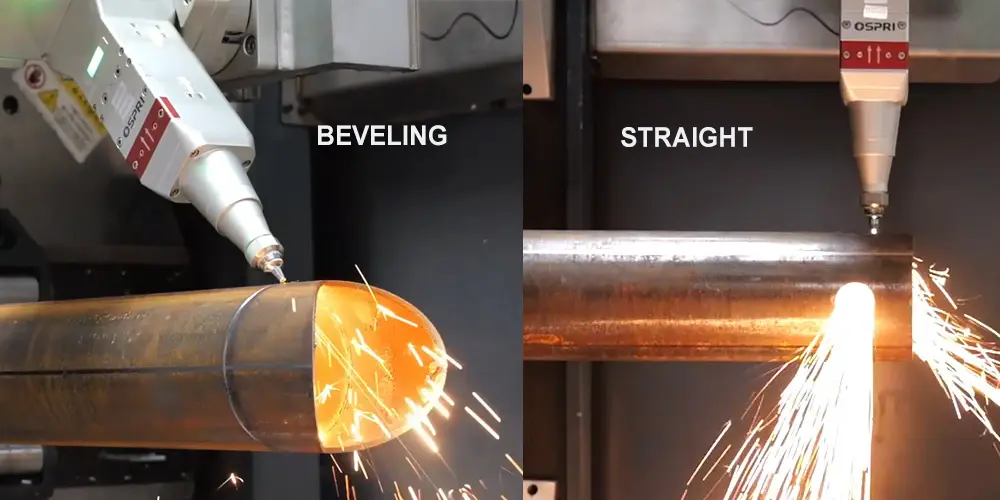
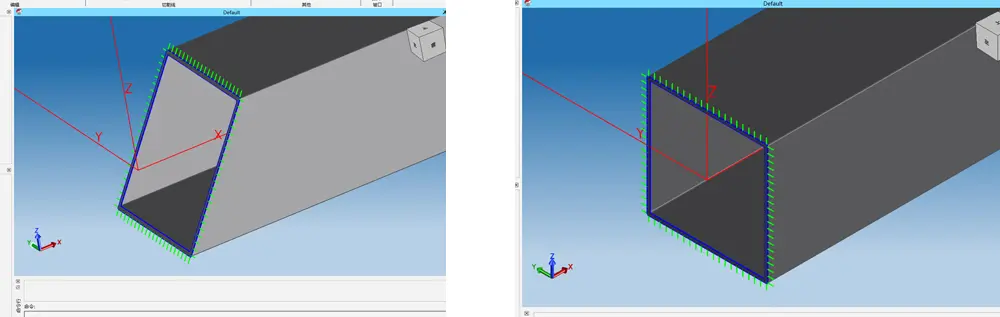
Straight cutting is the basic function of all tube laser cutting machines. The laser head cuts the tube vertically at a 90° angle, separating the material without modifying the edge profile. This method is particularly suitable for applications that only require dividing the tube by length without structural welding, such as furniture frames, display racks, light metal supports, or general assembly components. Straight cutting is fast, efficient, clean, and cost-effective, making it widely used in industries where load-bearing requirements are minimal.
В отличие от, косое резание is considered an advanced feature in tube laser processing. It requires the laser head to tilt at a precise angle while maintaining consistency across the circumference of round, square, or irregular tubes. This demands stable optical paths, precise CNC control, robust mechanical structure, and a reliable tilting mechanism. Bevel cutting allows V, X, K, and up to nine different groove shapes. Its purpose is not just cutting the pipe but preparing the end for welding, ensuring maximum penetration and superior joint strength.

From the purpose perspective, straight cutting only aims to separate the tube, while bevel cutting focuses on ensuring two tubes can be welded firmly and neatly. Straight-cut edges form a basic corner weld with limited contact area, resulting in stress concentration and lower strength, suitable for non-critical applications. Bevel-cut edges, however, create an angled groove that allows deep weld penetration, producing a seam that can be stronger than the base material, which is crucial for engineering machinery, heavy equipment, pressure piping, and large structural frameworks.

Technically, the difference is significant. Straight cutting is a basic operation that almost every tube laser cutter can perform. Bevel cutting, however, requires continuous tilt compensation while the laser moves at high speed, demanding advanced CNC response, precise path planning, and consistent angle control. Machines without professional bevel hardware and software cannot achieve consistent bevel angles or precise edge quality. As a result, bevel cutting machines are typically high-end models used in complex structural and high-strength welding applications.
For manufacturers, choosing between straight cutting and bevel cutting depends entirely on the application. If the tubes are used for simple assembly without heavy welding, straight cutting is fast, economical, and sufficient. If the project involves structural welding, load-bearing components, thick-wall tubes, or strict weld strength requirements, bevel cutting is essential. Selecting the correct cutting method ensures better product quality, higher processing efficiency, and structural reliability, providing a long-term competitive advantage for industrial manufacturers.