





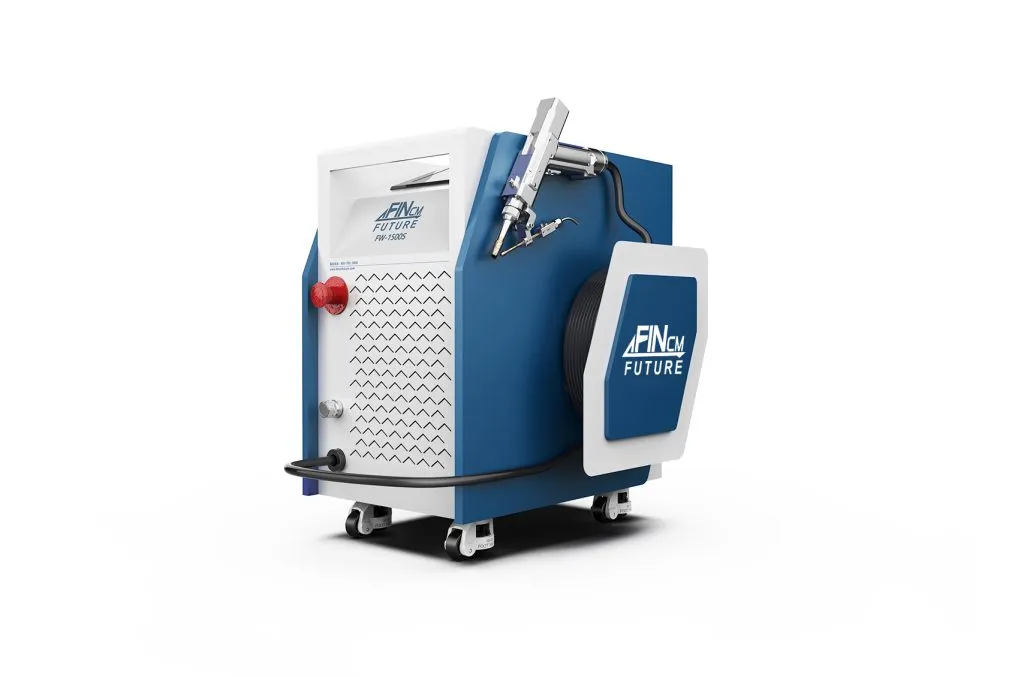
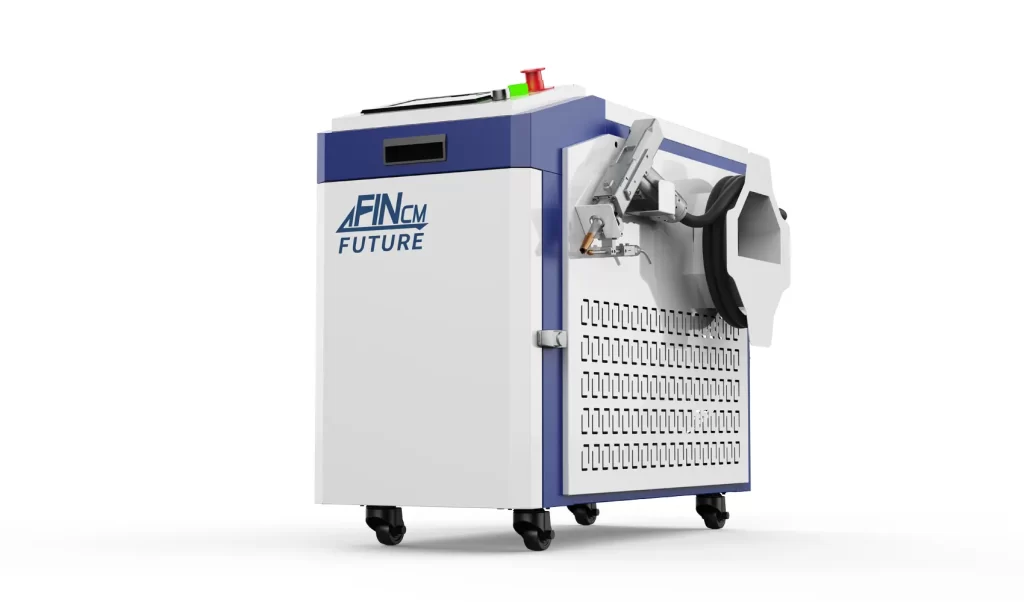


Handheld laser welders generally include Air-Cooled and Water-Cooled Welding Machines
A fiber laser welding machine is a device that uses laser beams transmitted through optical fibers for welding. Based on the cooling method, these machines are categorized into air-cooled and water-cooled types.
- Water-Cooled: Utilizes water’s high specific heat capacity and low temperature to dissipate heat. The heat generated during welding is quickly removed through water circulation.
- Air-Cooled: Relies on forced air cooling, using fans to cool the machine’s surface and carry away heat.
Key Differences Between Air-Cooled and Water-Cooled Welding Machines
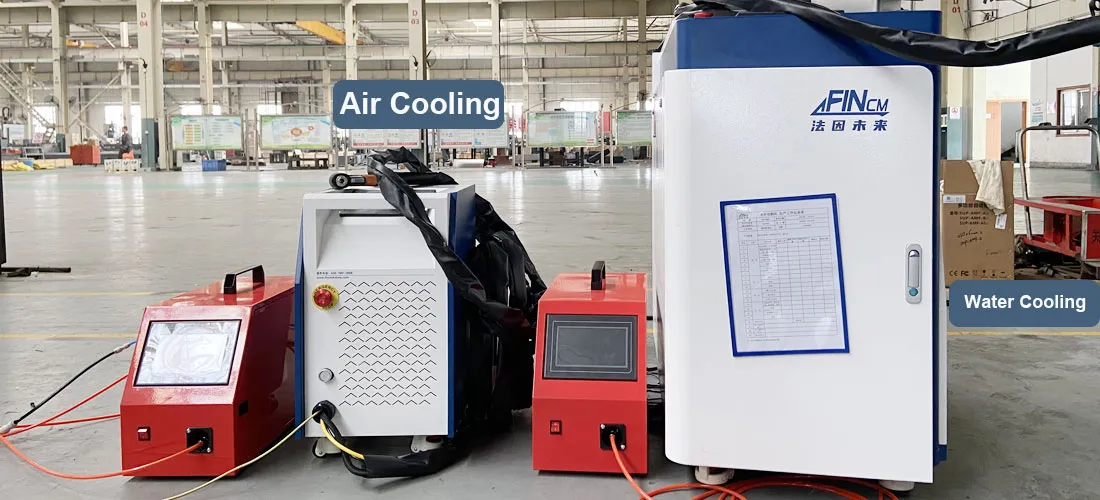
Air-cooled handheld welding machines and water-cooled welding machines differ significantly in several aspects, including cooling method, size and weight, application scenarios, heat dissipation effectiveness, and cost.
1. Cooling Method
- Air-Cooled: Uses fans for cooling by circulating air to reduce heat generated during welding. This method is simpler and eliminates the need for an additional cooling system, resulting in a more compact structure.
- Water-Cooled: Uses water circulation for cooling, providing superior heat dissipation. Water absorbs and removes heat more effectively, keeping the welding area temperature stable.
2. Size and Weight
- Air-Cooled: Generally smaller and lighter, making it portable and easy to operate. This makes it suitable for outdoor tasks, emergency repairs, and small welding jobs.
- Water-Cooled: Requires an additional water cooling system, making the machine larger and heavier, limiting its use in spaces where frequent mobility is needed.
3. Application Scenarios
- Air-Cooled: Ideal for short-term, intermittent welding tasks or use in lower-temperature environments. Its portability makes it well-suited for outdoor operations and small-scale businesses.
- Water-Cooled: Designed for long-term, high-intensity welding tasks or operations in high-temperature environments. It is commonly used in factory production lines and large-scale equipment manufacturing, offering stable and efficient welding results.
4. Heat Dissipation
- Air-Cooled: Provides relatively weaker heat dissipation. Prolonged continuous use may lead to overheating, requiring careful control of welding time and frequency to avoid damage.
- Water-Cooled: Delivers superior heat dissipation, effectively controlling temperature fluctuations during welding. This ensures consistent and reliable welding quality.
5. Cost
- Air-Cooled: Simpler structure and lower manufacturing cost make it a more budget-friendly option, favored by many small businesses and individual users.
- Water-Cooled: Higher cost due to the added water cooling system and higher manufacturing precision. However, for long-term use and high-quality welding demands, it offers excellent value for money.
How to Choose the Right Cooling System?
Air-Cooled is Best for:
- Short-term, intermittent welding.
- Low-power welding tasks or outdoor operations.
- Users who prioritize portability and cost-effectiveness.
Water-Cooled is Best for:
- High-intensity, long-duration continuous operations.
- High-power welding or use in high-temperature environments.
- Users requiring high-quality welding and equipment stability.
Which Cooling System is Better?
The choice of cooling system depends on specific application needs:
- Air-Cooled: A great option for low-power laser welding when portability and simplicity are priorities.
- Water-Cooled: Better suited for high-power laser welding with demands for stability and prolonged operation.
Conclusion
If your welding needs are short-term, portable, and budget-conscious, an air-cooled welding machine is the better choice. However, for high-intensity, long-term professional welding tasks, a water-cooled welding machine offers superior stability and heat dissipation, ensuring better reliability and performance.