





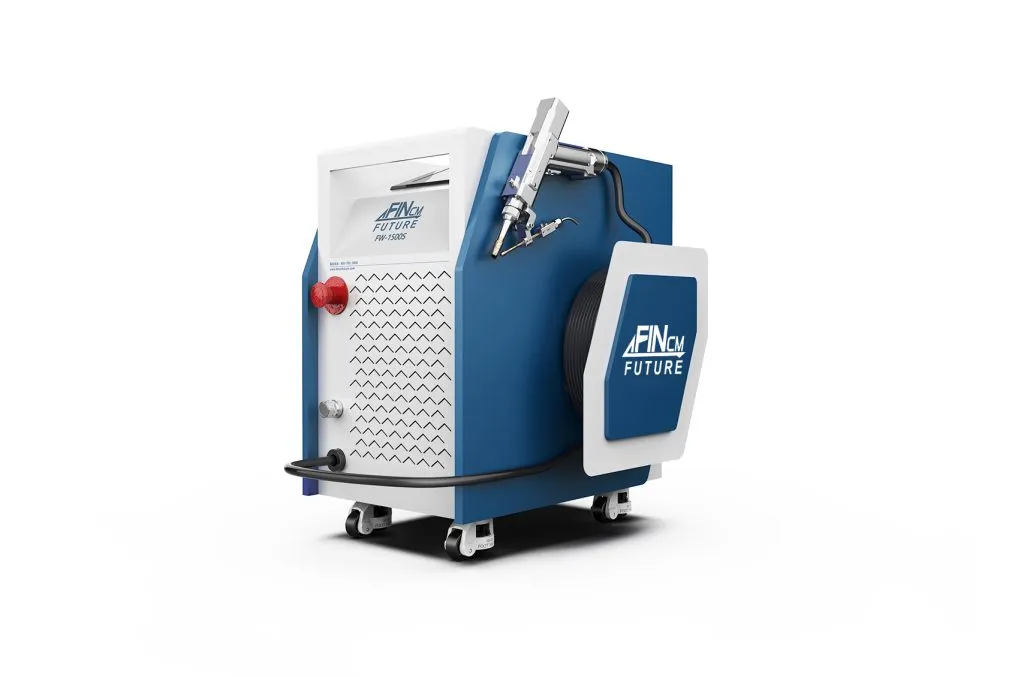
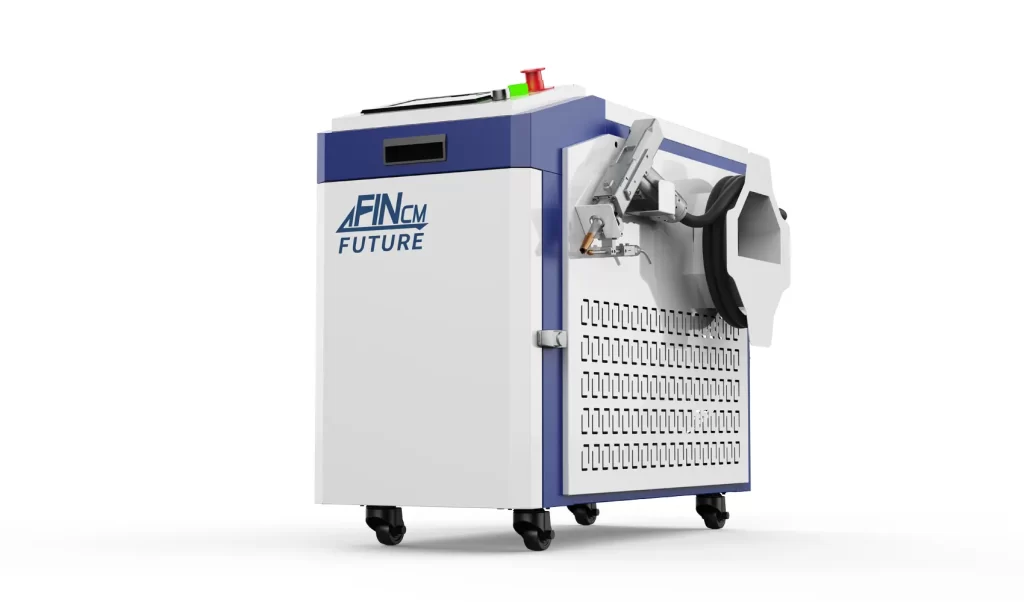


Handheld laser welding machine is highly favored for its ease of operation,flexibility and efficiency However, in practice, the welding results often fall short of expectations. What could be the reason? Let’s take a closer look at some common issues.
-
Spatter Issues
During laser welding, molten material may splatter and adhere to the surface, forming metal particles that affect the product’s appearance.
- Causes: Excessive power causing rapid melting, unclean material surfaces, or overly high gas pressure.
- Solutions:
- Adjust the power appropriately.
- Ensure the material surface is clean.
- Reduce gas pressure.
2. Excessively High Weld Beads
Weld seams that are significantly higher than normal appear oversized and unappealing.
- Causes: Excessive wire feed speed or slow welding speed.
- Solutions:
- Reduce the wire feed speed in the control system.
- Increase the welding speed.
3.Welding Misalignment
Welding that does not solidify at the structural joint results in failed positioning and unsuccessful welding.
- Causes: Inaccurate positioning during welding or misalignment between wire feed and laser focus.
- Solutions:
- Adjust the laser offset and oscillation angle in the control board.
- Check for misalignment between the wire feeder and the laser head.
4. Deep Weld Seam Discoloration
When welding stainless steel or aluminum alloy, overly deep seam discoloration creates a stark contrast with the material surface, negatively affecting appearance.
- Causes: Insufficient laser power or excessively fast welding speed.
- Solutions:
- Adjust laser power.
- Adjust welding speed.
5. Uneven Corner Welding
In corner welding, uneven speed or positioning leads to irregular corner welds, affecting both strength and aesthetics.
- Causes: Inconvenient welding posture.
- Solutions: Adjust the focal offset in the laser control system to enable side welding with the handheld laser head.
6. Weld Seam Depression
Depressions in weld seams reduce strength and result in substandard products.
- Causes: Excessive laser power or improperly set laser focus leading to deep molten pools and over-melted material.
- Solutions:
- Adjust laser power.
- Correct the laser focus settings.
7. Uneven Weld Seam Thickness
Weld seams may vary in width or thickness, appearing inconsistent.
- Causes: Issues with laser output or wire feeding.
- Solutions: Check the stability of the laser and wire feeder, including power supply voltage, cooling system, control system, and grounding.
8. Undercutting
Undercutting refers to poor fusion between the weld and material, leading to grooves or weak spots that compromise quality.
- Causes: Excessive welding speed preventing uniform molten pool distribution or insufficient filler material for large gaps.
- Solutions:
- Adjust laser power and speed based on material strength and weld size.
- Perform post-weld filling or repairs as needed.
9. Excessive Consumption of Protective Lens
- Problem: In normal welding, the nozzle is downward. In vertical welding, sparks may enter the nozzle, damaging the lens.
- Solutions:
- For flat welding, keep the nozzle at a 45° angle to the material and weld from front to back.
- Protect the lens by wrapping the nozzle with masking tape to prevent dust intrusion and reduce internal machine damage.
10. Wire Feeder Jamming
Wire feeder jamming disrupts welding and requires immediate attention.
- Causes: Clogged nozzle, feeder blockage, or wire spool malfunction, especially when welding soft metals like aluminum.
- Solutions:
- Inspect and clear the nozzle.
- Check for blockages in the wire feeder.
- Ensure smooth rotation of the wire spool.
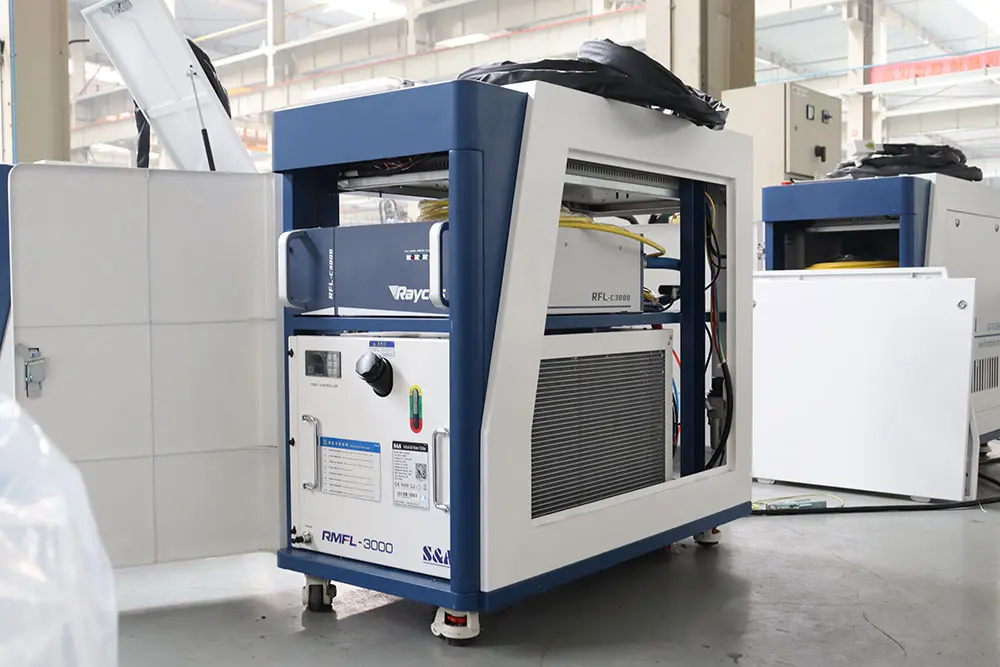
In short, although the fiber laser welding machine equipment is simple to operate, basic training and operation guidance are still required before the first use.