







When using a fiber laser cutting machine, auxiliary gases are more than just a support element—they directly affect cutting speed, edge quality, and overall cost. The three most common gases in laser cutting are oxygen (O₂), nitrogen (N₂), and compressed air. Choosing the right one depends on your material, thickness, and desired finish.
Oxygen (O₂) – Fast Cutting and Deep Penetration
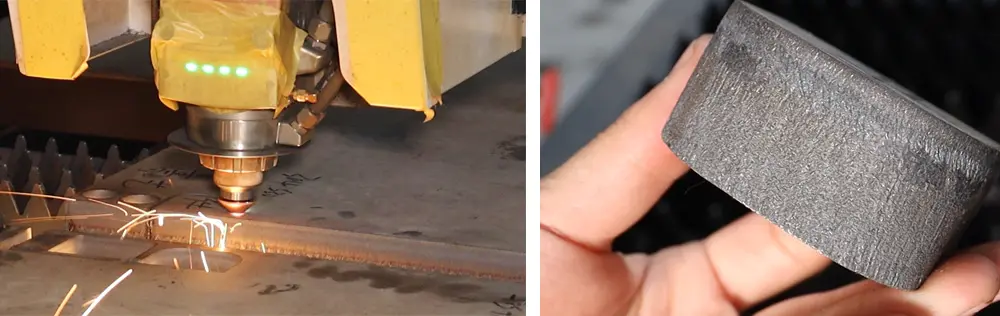
Oxygen is widely used for cutting carbon steel and thick plates. It reacts with molten metal to create additional heat, boosting cutting speed and improving penetration.
- Best for: Carbon steel, structural steel, thick plate cutting
- Advantages: High speed, strong combustion, suitable for heavy-duty manufacturing
- Considerations: Causes oxidation on cut edges; may require post-processing

Nitrogen (N₂) – High-Quality, Oxidation-Free Cutting
Nitrogen is an inert gas that prevents oxidation during the cutting process. It delivers smooth, bright edges without discoloration, making it ideal for visible parts or components that don’t require secondary processing.
- Best for: Stainless steel, aluminum, high-end parts
- Advantages: Clean, bright edges, oxidation-free finish, no post-treatment needed
- Considerations: Higher cost due to gas consumption; slower on thick plates compared to oxygen

Compressed Air – Cost-Effective and Versatile
Compressed air contains around 78% nitrogen and 21% oxygen. It’s a budget-friendly alternative that works well for certain applications, particularly aluminum sheets and galvanized steel.
- Best for: Aluminum, galvanized steel, thin to medium plates
- Advantages: Low operating cost, reduces oxide layer, suitable for general manufacturing
- Considerations: Not ideal for thick plates or high-end precision cuts
Laser Cutting Gas Selection at a Glance
| Gas Type | Best For | Advantages | Limitations |
| Oxygen (O₂) | Thick plates, carbon steel, structural steel | High speed, strong penetration | Oxidation on edges |
| Nitrogen (N₂) | Stainless steel, aluminum, high-end parts | Smooth, oxidation-free edges | Higher cost, slower on thick plates |
| Compressed Air | Aluminum, galvanized steel, thin plates | Low cost, versatile | Lower edge quality than N₂ |
Choosing between oxygen, nitrogen, and air is about balancing cost, speed, and edge quality. For thick carbon steel, oxygen delivers speed and power. For premium stainless steel or aluminum parts, nitrogen ensures a perfect finish. For cost-conscious projects, compressed air is an economical choice.
FINCM specializes in manufacturing high-power fiber laser cutting machines and offers expert guidance on selecting the right cutting gas for your production needs. Contact us for tailored solutions that maximize your efficiency and quality.